Four AI image edits. What stayed put?
I asked an image tool to remove a cloth, adjust the lighting, crop the picture and finish it. Each request said to preserve the room. The results show why I inspect what changed outside the part I asked to edit.
The test and the source.
Northyards Coffee is a fictional café created for this test. Every image on this page is synthetic. None documents a client, a real premises or work delivered to a café.
I used the built-in Codex image tool for a four-step sequence, with each result becoming the input to the next edit. The exact backend model and variant were not exposed. This is one sequence, reviewed visually on 9 September 2026; it is not a benchmark or a comparison between models.
The instruction was narrower than the change.
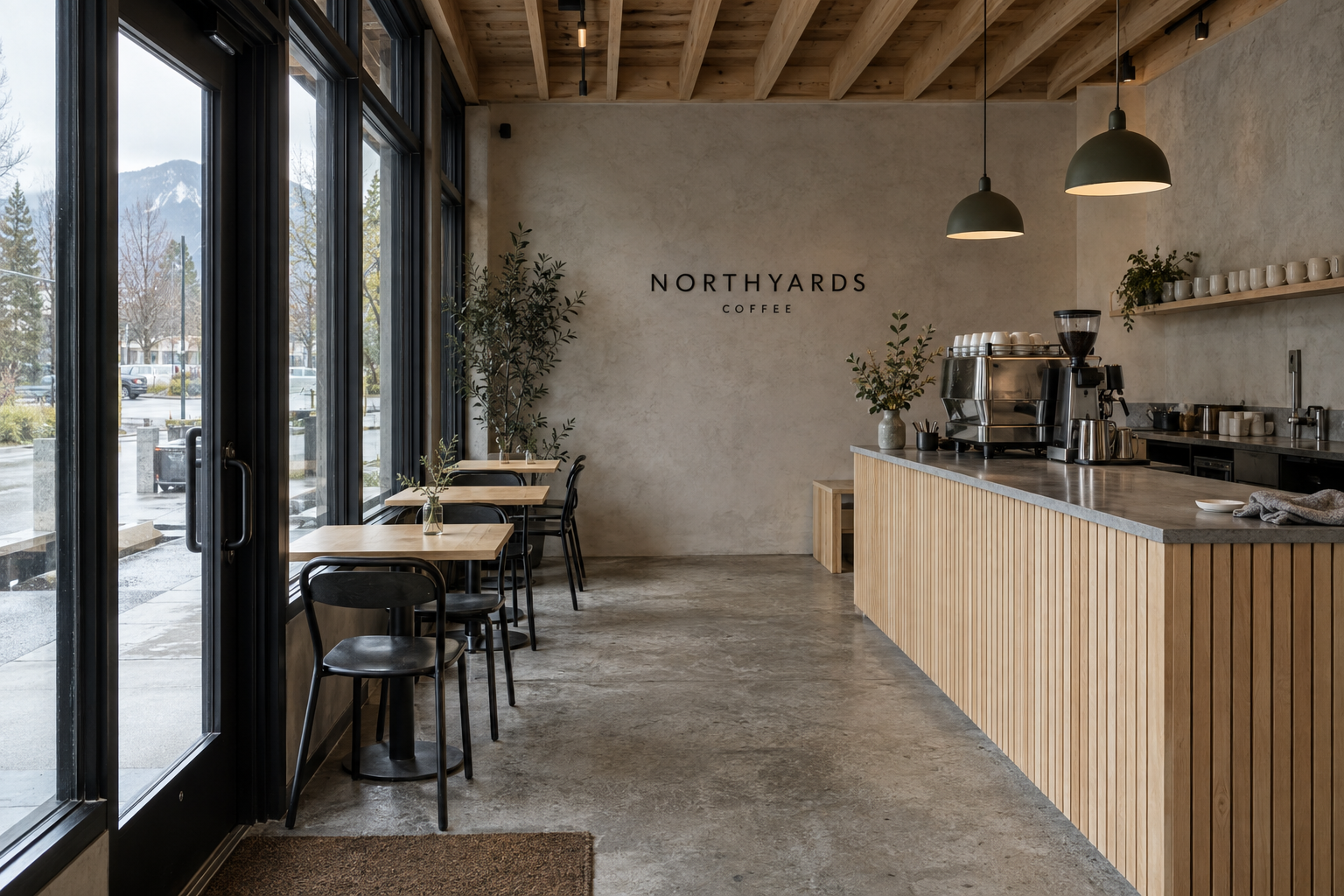
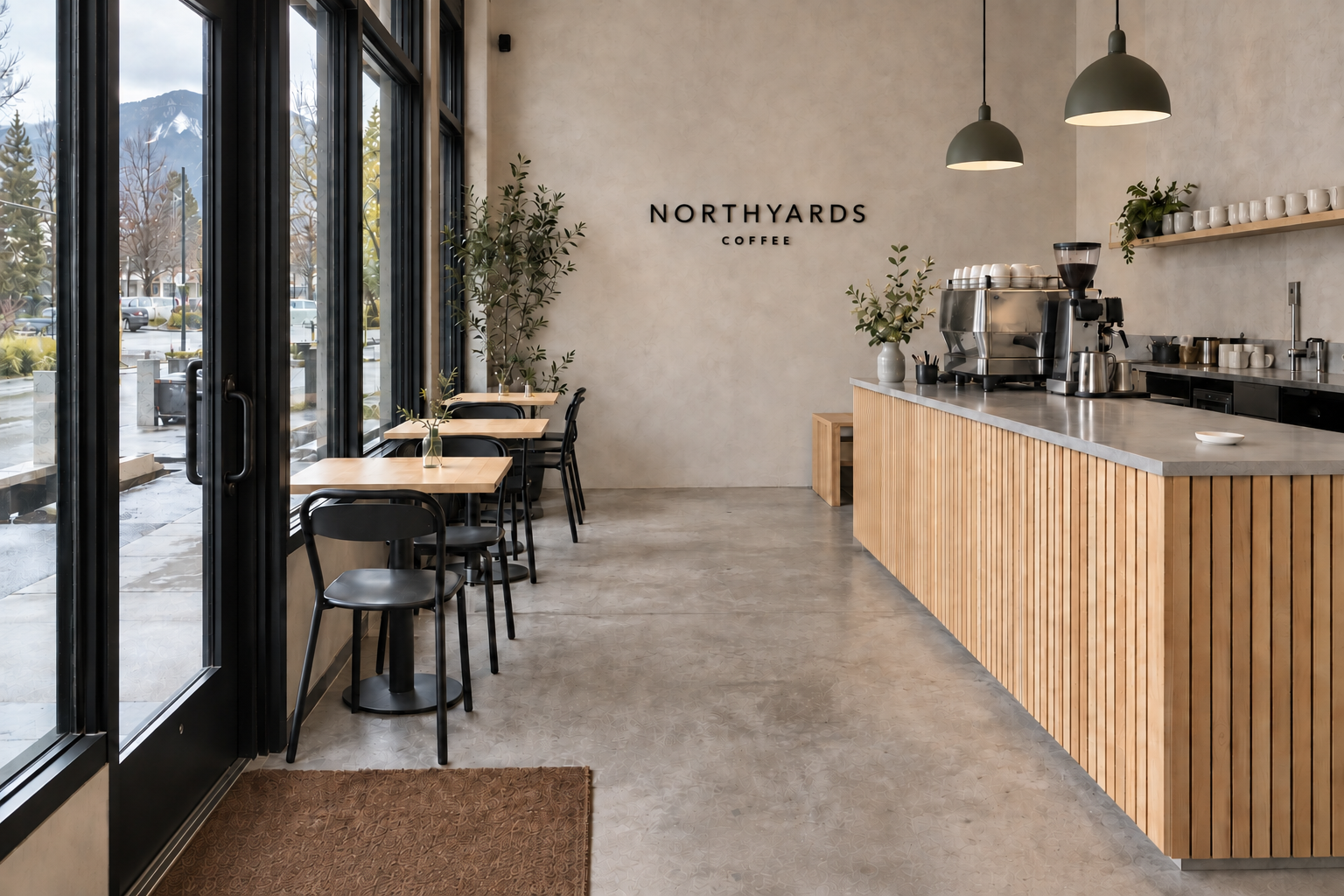
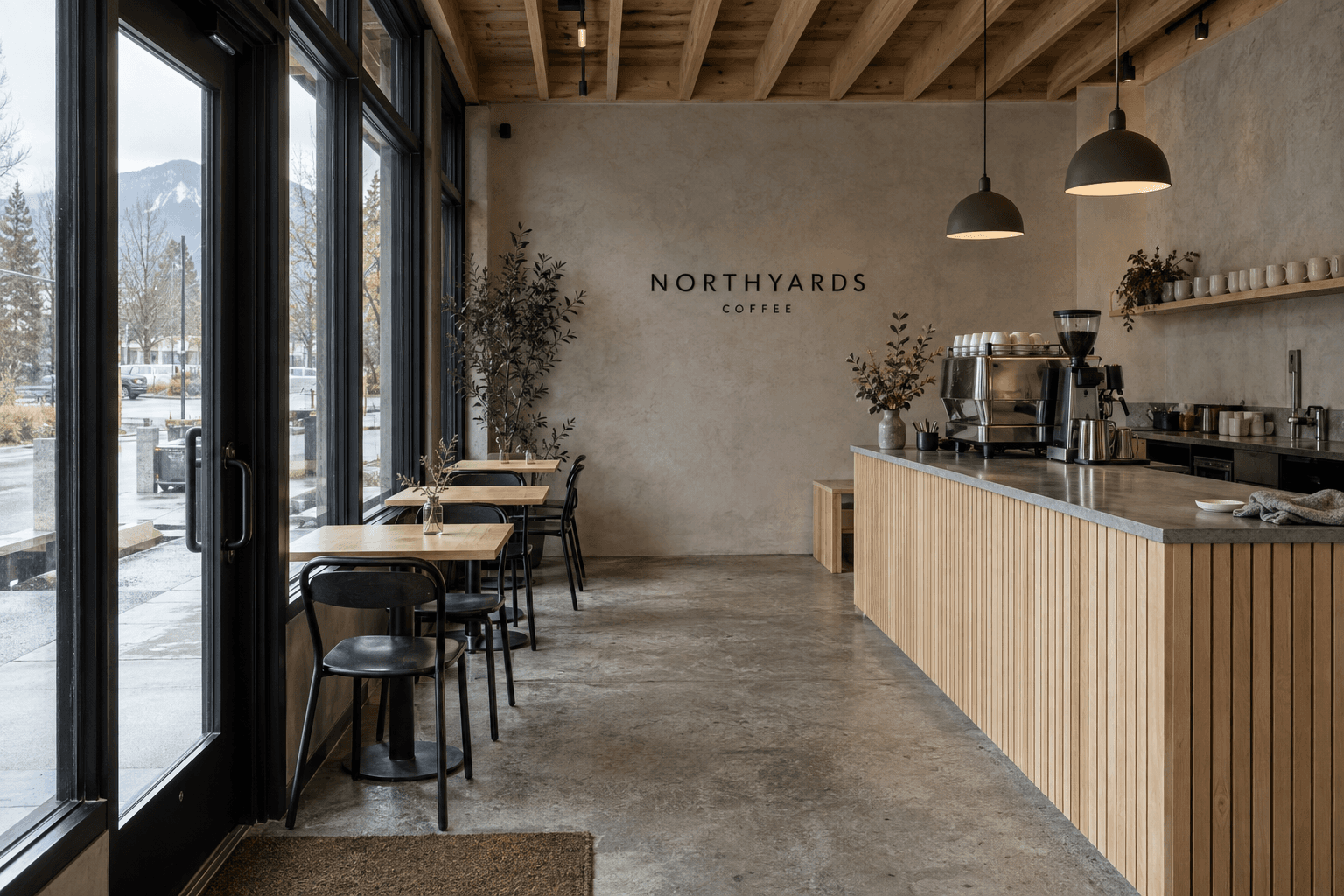
The original and all four results are available below. Compare the doormat and concrete floor, the front table base, the counter’s bottom edge and the room framing as well as the requested edit.
- A · Remove cloth
- The cloth is gone and the saucer remains. Floor and mat textures also change, so the strict request to preserve everything else is not met.
- B · Lift shadows
- The interior becomes brighter. Surface texture changes continue, and the front table’s base is altered. This is more than a lighting adjustment.
- C · Modest crop
- The ceiling leaves the frame, but a lower counter edge and more foreground become visible. The result does not behave like a crop of the supplied image.
- D · Final finish
- The broad composition follows C. The image looks polished, but it retains the earlier changes. A convincing final image does not restore fidelity.
My production decision.
I would use this sequence as an exploration of an invented scene, with that status made clear. I would not use it to document a real interior or promise that a specific product, fitting or material was preserved.
For a precise crop, exposure correction or sharpening pass, I would use ordinary image-editing controls on the approved source. For a local removal, I would inspect the untouched areas as well as the repaired area, and keep the original available for comparison.
The prompt is part of the evidence.
The requests named specific things to retain: window geometry, furniture, signage, the saucer and surface texture. The crop instruction explicitly prohibited outpainting or inventing parts of the room. That makes the gap between the request and the result visible.
You can download the source images and read the exact prompts. The judgment here is visual: I have not assigned a numerical quality score or measured a general failure rate.
What I take into the next job.
A successful requested edit and an acceptable finished asset are different decisions. I check both. The right tool depends on whether I am inventing a scene, refining a concept or preserving something that must stay true.
That is the useful part of testing AI in my own practice: I can show the result, explain the limitation and choose the method to match the job.